Dr. Mariia Tanasyshyn, ND
Founder, MARM Health Inc.
Picture this: it is six thirty in the morning. You are hurrying to get everyone out the door, and you grab the wipes to give the kitchen counter and the daycare bag one last pass. The smell lingers on your hands as you drive to work, but you barely notice it anymore. It is just part of the routine. It is what responsible people do.
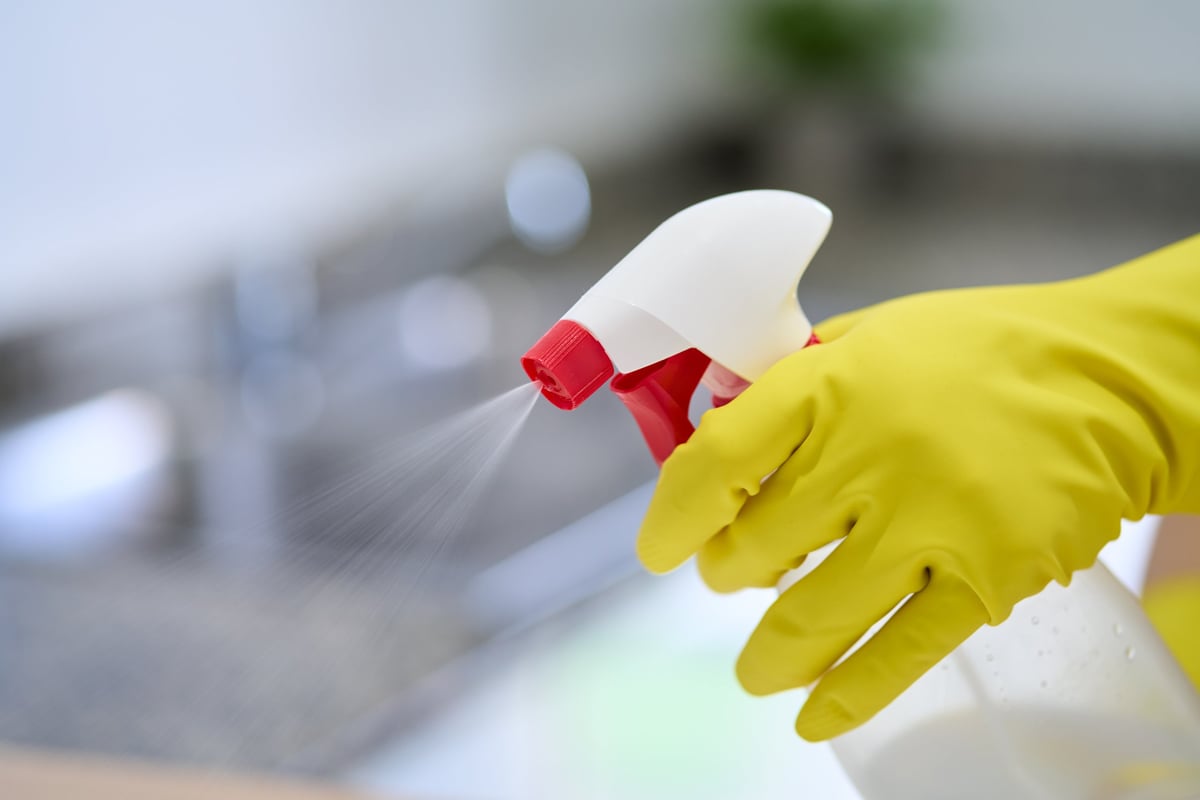
Now picture the other end of the day. You clock out after a shift spent spraying, wiping, and sanitizing every surface in sight, because keeping people safe was the whole point of your job. Your hands are dry. You are bone tired. And a small, quiet thought creeps in when nobody is listening: what am I doing to my own body?
That thought deserves an answer. Because the very chemicals meant to keep us clean may be quietly taking a toll on the people doing the cleaning. They are called quaternary ammonium compounds, or QACs for short. They are the main ingredients in many disinfectants, antibacterial wipes, hand sanitizers, and cleaning sprays found in homes, daycare centers, schools, offices, hospitals, and industrial sites across North America. Their use rose sharply during the pandemic, and today a large share of the disinfectants on the market contain them.
The worry started almost by chance. In 2008, a reproductive researcher named Dr. Terry Hrubec noticed something alarming in her lab. Her normal mice, which were not part of any special experiment, were giving birth to babies with severe spine and brain defects. The cause, traced with colleague Dr. Patricia Hunt, was the disinfectant used to clean the lab: a QAC.
In a landmark study, the two researchers fed mice a diet that included QACs for six months. The mice lost much of their ability to become pregnant and carry babies to term. Follow-up research found the chemicals could harm the placenta, raise inflammation, and lower sperm counts in male mice.
So let me slow this down, because this is where the story turns from the lab to your life. Have you been more tired than you can explain lately? Does your belly feel off more days than it feels fine? Do headaches show up at the end of your shift and follow you home? Do you seem to catch every bug that goes around, while the rest of your household stays healthy?
These are the kinds of things that get dismissed as life stress, or just being busy. But when you spend your working hours breathing in and touching these chemicals all day, it is worth asking whether it is all a coincidence. Because the concerns do not stop with fertility. Researchers have now found these compounds in human blood, breast milk, urine, and even feces. A 2024 study found they can damage the cells that make myelin, the protective coating around your nerves that works like the insulation on an electrical wire. Other research links them to low energy, because they may harm the part of our cells that produces the fuel our bodies run on.
Professor Amina Salamova of Emory University found that QAC levels in dust at daycare and assisted living facilities are about three times higher than in regular homes. That matters, because these are places used by the smallest children and the most fragile adults.
Let me be clear and honest with you. Finding a chemical in the body does not automatically prove it causes harm, and animal studies do not always translate to people. Industry groups also point out that these products are carefully tested and safe when used as directed on the label. So this is emerging science, not settled fact. But it is science worth knowing about, especially if you feel tired, have unexplained symptoms, or work closely with these chemicals every day.
Many readers work in cleaning, custodial work, or healthcare and handle disinfectants all day long. If that is you, here are practical steps to protect yourself:
Here is the honest truth: right now, you are carrying a question you cannot answer on your own. Is this normal? Is my body fighting me, or fighting for me? Am I the only one who feels this drained?
You are not the only one. And you do not have to stay stuck guessing.
At MARM Health Inc., we are naturopathic doctors who dig for the root cause instead of handing you a label and sending you home. We help you understand your fatigue, your gut, your breathing, and your hormones. We connect the dots between what you are exposed to all day and how it shows up in your body. And we build a plan that fits your life and your job, so you can finally feel like yourself again, not just survive the week. We offer virtual consultations across all of Ontario, so this care can come to you no matter where you are.
Start with a free 15 minute virtual call
Bring us your fatigue. Tell us your story. Ask your question. You do not need to have all the answers, that is literally what we are here for.
Book Your Free Call TonightDr. Mariia Tanasyshyn, ND, is the founder of MARM Health Inc., a naturopathic doctor in good standing with the College of Naturopaths of Ontario (CONO). She combines a strong medical background with evidence-informed, patient-centered naturopathic care to help Ontarians address chronic digestive, hormonal, and fatigue related concerns. She is fluent in English, Ukrainian, and Polish, and is committed to making naturopathic care accessible to diverse communities.
MARM Health Inc. offers virtual root-cause naturopathic care across Ontario. Start with a free 15 minute virtual call.
Disclaimer: This article is for educational purposes and is not medical advice. Always consult a qualified healthcare provider about your individual health.